Guide · cover types
Patio Cover Types Compared
Pick by what you need to block. A solid or insulated aluminum roof stops sun and rain; open lattice cuts glare but lets rain through; a louvered roof does both on demand at roughly two to three times the price per square foot. Wood pergolas give the classic look with the most upkeep and the most fire-zone limits.
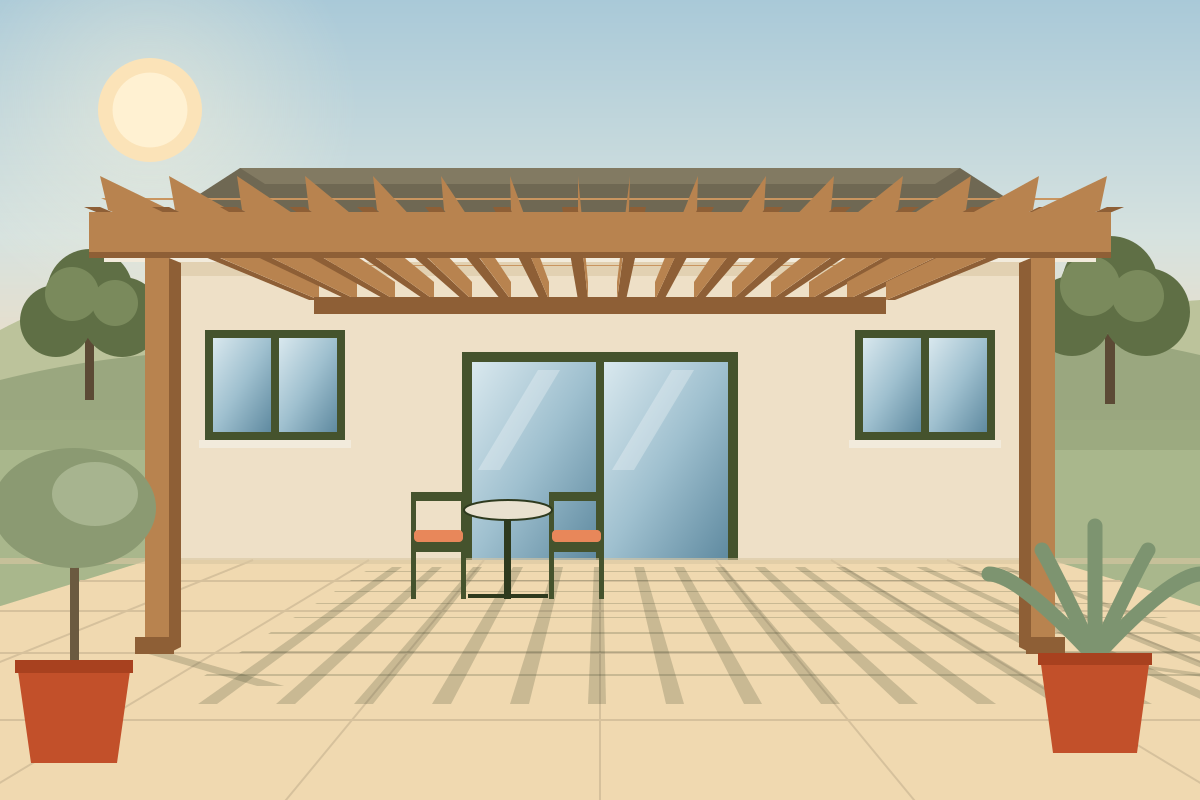
The five roof styles
Side views, with the shade each one throws on the patio.
Solid aluminum
Full shade and rain cover. Simple, low cost, can feel warm.
Insulated panel
Full shade, cool ceiling, ready for lights and fans.
Open lattice
Filtered, striped shade. No rain protection.
Louvered
Adjustable: open for sun, closed for shade and rain.
Wood pergola
Open timber frame. Partial shade; tops can be added.
Side-by-side comparison
| Solid aluminum | Insulated panel | Open lattice | Louvered | Wood pergola | |
|---|---|---|---|---|---|
| Shade | Full | Full | Partial (about 40–60% filtered) | Adjustable, partial to full | Partial; more with tight rafters or a top |
| Rain | Keeps it off | Keeps it off | Passes through | Keeps it off when closed | Passes through unless topped |
| Heat underneath | Can radiate heat | Coolest | Airy | Airy when open | Airy |
| Light into the house | Least | Least | Good | You choose | Good |
| Upkeep | Wash, clear gutter | Wash, clear gutter | Wash | Wash, clear gutters, motor service | Re-stain every few years; check for rot |
| Installed cost per sq ft | $20–$50+ | Above solid; get quotes | $18–$55+ | $45–$125+ | $30–$65+ |
| Walnut Creek permit | Not named in exemption; ask | Not named; ask | Exempt if unenclosed and 10 ft or lower | Closes solid; plan on a permit | Open pergola may fit the lattice exemption; confirm |
| Fire-zone fit (§504.11, within 3 ft) | Noncombustible | Check panel core listing | Noncombustible (aluminum) | Noncombustible (aluminum) | Needs ignition-resistant lumber |
Attached or freestanding
| Attached | Freestanding | |
|---|---|---|
| Posts and footings | Usually 2 or more at the outer edge | 4 or more |
| Connection | Wall ledger or eave/roof brackets, with flashing | None to the house |
| Cost | Lower | Higher (more posts and footings) |
| Best for | Shade from the back door outward | A spot out in the yard: pool, fire pit, view |
| Fire rules | Within 3 ft of the house by definition | Depends on distance; the code official can extend rules to 50 ft |
| Walnut Creek setbacks | May be reviewed with the house | Accessory structure setbacks if in a required yard |
Orientation matters as much as type
A south-facing patio is the easiest to shade: the summer sun is high and a roof blocks it, while the low winter sun slips underneath. West-facing patios take the hottest sun of the day at a low angle; a roof helps overhead, but the late sun comes in from the side, so add a drop shade, screen or planting on the west edge. East-facing patios get gentle morning sun and are shaded by the house by afternoon.
Questions homeowners ask
What is the difference between a patio cover and a pergola?
“Patio cover” usually means a roof over the patio, solid or lattice, often attached to the house. “Pergola” usually means an open frame of beams and rafters, often freestanding. Louvered pergolas blur the line: they are pergola-shaped frames with a roof that opens and closes.
Which patio cover is coolest underneath?
An insulated panel roof, because the foam core keeps the underside from heating up. A louvered roof opened partway also stays comfortable by letting hot air escape. Thin solid aluminum can radiate heat on hot afternoons, especially when it is mounted low.
Is attached or freestanding better?
Attached covers cost less (two posts instead of four) and keep you dry from the door outward, but they depend on a sound wall or eave and are always within 3 feet of the house for fire rules. Freestanding covers can go anywhere in the yard and never touch the house.
Sources
- Pacific Pavers — Aluminum patio cover cost per square foot (Orange County, February 2026)
- HomeGuide — How much does a louvered or motorized pergola cost? (February 2026)
- HomeGuide — How much does a pergola cost? (updated October 2024)
- City of Walnut Creek — Building Permit FAQs
- 2025 California Wildland-Urban Interface Code, Chapter 5 (UpCodes)
Checked October 2026. Rules and prices change; confirm with the agency or installer before you rely on them.
Ready to price your patio cover?
Tell us the size and the type you are leaning toward. A local installer can measure, quote and handle permits.